
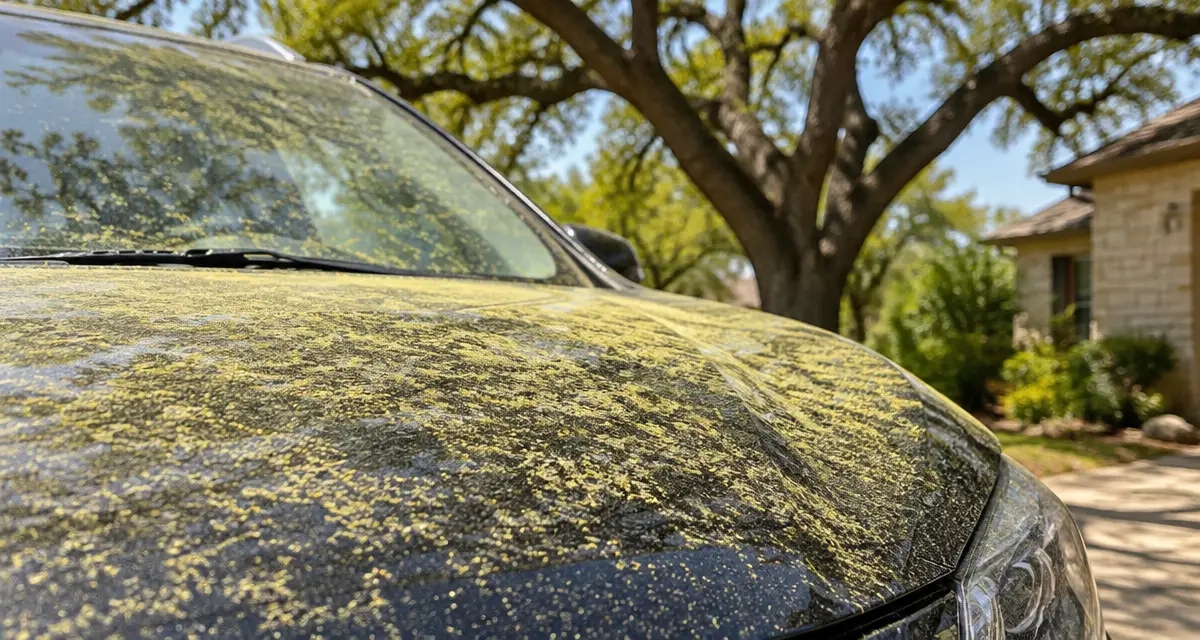
To safely clean oak pollen off your car, you must first gently rinse the vehicle with water to remove the loose top layer. Then, using a quality car shampoo and the two-bucket wash method, carefully wash the car from top to bottom before drying it thoroughly with a soft microfiber towel. Attempting to wipe pollen off a dry car will scratch your paint.
The Problem with Oak Pollen in Central Texas
Every spring, a fine, yellow-green dust settles on every outdoor surface in Austin. This is oak pollen, and while it's a nuisance for allergy sufferers, it's also a significant threat to your vehicle's paint. The main oak pollen season in our area typically runs from mid-February through mid-May, with a heavy peak in late March and early April, as noted by the Austin American-Statesman.
Pollen isn't just dust; it contains acids. When pollen gets wet from morning dew or light rain and then bakes in the Texas sun, this acidity can begin to etch into your car’s clear coat. Over time, this can cause permanent damage that dulls the finish and requires professional paint correction to fix.
Why You Should Never Dry-Wipe Pollen
When you see that thick layer of yellow on your car, your first instinct might be to grab a towel or a duster and simply wipe it off. This is one of the worst things you can do for your vehicle's finish. Pollen grains, though microscopic, have a surprisingly abrasive structure.
Wiping them across a dry surface is like rubbing fine-grit sandpaper all over your paint. This action creates thousands of tiny scratches known as swirl marks or micro-scratches. While they may not be obvious at first, they become highly visible in direct sunlight and significantly reduce your car's gloss and shine.
Step-by-Step Guide to Safely Washing Your Car
Doing the job yourself can be effective if you follow the right procedure and use the right tools. The key is to be gentle and let the water and soap do the heavy lifting, not aggressive scrubbing.
- Pre-Rinse Thoroughly: Before your wash mitt ever touches the paint, use a hose to gently rinse the entire vehicle. The goal is to let the water flow over the surfaces to carry away as much loose pollen and grit as possible. Avoid using a high-pressure jet, which can drive the particles into the paint.
- Use the Two-Bucket Method: Prepare two buckets. Fill one with your car wash soap solution and the other with plain water for rinsing. After washing a small section of the car, dunk your dirty wash mitt into the rinse bucket to dislodge pollen and dirt before putting it back into the soapy water bucket. This prevents you from reapplying abrasive particles back onto the car.
- Wash From Top to Bottom: Start with the roof and work your way down the windows, hood, trunk, and side panels. The lower parts of the car are typically the dirtiest, so washing them last prevents you from contaminating your cleaner upper sections.
- Rinse Completely: Once you've washed the entire car, give it a final, thorough rinse. Ensure all soap residue is gone, as dried soap can also leave spots and streaks.
- Dry with Microfiber: Do not let the car air-dry, as this will lead to water spots. Use clean, high-quality microfiber drying towels to gently blot the water from the surface. Avoid aggressive rubbing motions.
Protecting Your Vehicle's Finish
An unprotected car is much more susceptible to pollen damage. The best defense is a good offense. Applying a protective layer makes your car's surface slicker, which makes it harder for pollen to stick and much easier to wash off safely.
Consider applying a quality hand wax or a more durable paint sealant after washing. This sacrificial layer sits on top of your clear coat, taking the brunt of environmental contaminants like pollen, bird droppings, and UV rays. For those who want the ultimate protection, parking in a garage or using a high-quality car cover is the most effective solution during peak pollen season.
Complying with Austin Water Regulations
When washing your car at home, it's important to be mindful of local water conservation rules and environmental impact. According to Austin Water, all residential car washing must be done with a hose equipped with a positive shutoff valve to prevent water waste. Furthermore, the U.S. Environmental Protection Agency (EPA) highlights that runoff from car washing can carry detergents and contaminants into storm drains, which flow directly into our local creeks and lakes. Professional detailers are equipped to manage water usage and runoff responsibly.
When to Call a Professional Detailer
If the pollen has been sitting for weeks, is heavily caked on, or you simply don't have the time and tools to do the job safely, calling a professional is your best bet. A professional detailer has the right products, tools like foam cannons, and techniques to lift pollen away from the paint without causing scratches.
At Hill Country Shine Detailing, we provide meticulous exterior auto detailing services that safely remove all traces of pollen and road grime. We can assess the condition of your paint and recommend the best course of action, whether it's a deep clean, a clay bar treatment, or the application of a protective wax or sealant.
Frequently Asked Questions
How often should I wash my car during pollen season?
Ideally, you should wash your car at least once a week during the heavy pollen season in Austin. If your car is parked outside under or near oak trees, you may need to wash it even more frequently to prevent buildup.
Can oak pollen damage my car's paint?
Yes. Oak pollen is acidic and can etch into your vehicle's clear coat if it's left on the surface, especially when mixed with moisture and baked by the sun. This damage can appear as small, dull spots on the finish.
What about the pollen inside my car?
Pollen gets everywhere, including inside your vehicle's cabin. It's a good idea to have your cabin air filter checked and replaced after pollen season. A full interior detailing service can remove pollen from carpets, seats, and air vents, improving the air quality inside your car.