
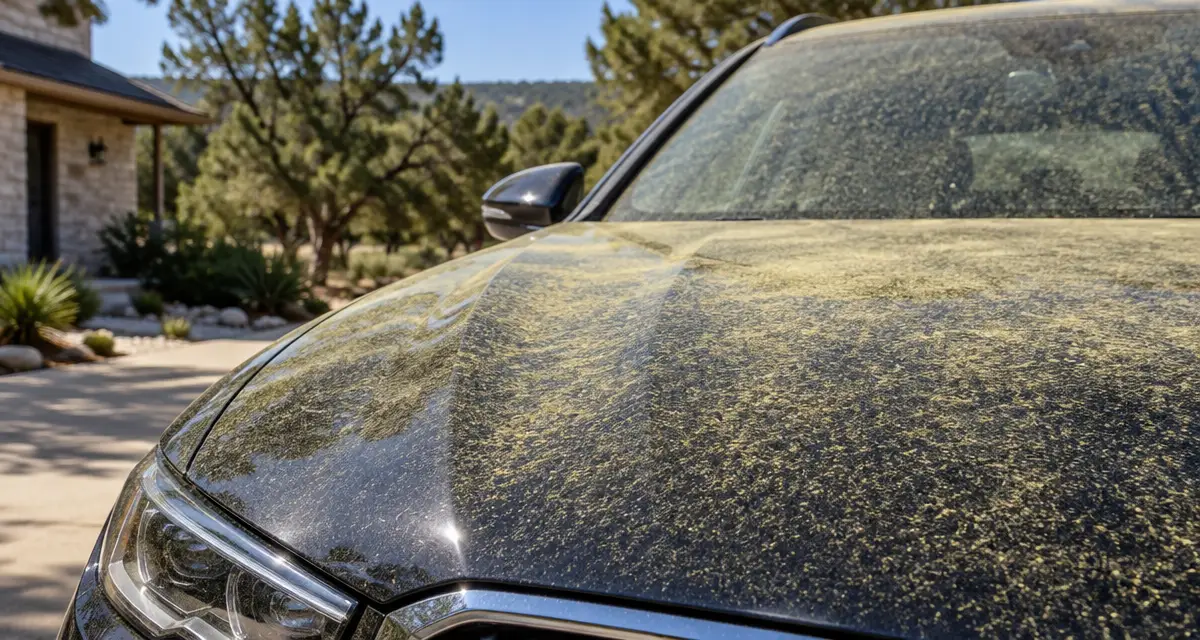
In Austin, you should wash cedar pollen off your car frequently throughout the season, which typically runs from December through mid-February. Waiting for the yellow dust to stop falling can allow the pollen, which is acidic when wet, to etch and damage your vehicle's paint. A consistent washing schedule is the best defense for your car's finish during the Central Texas cedar fever season.
What Is Cedar Pollen and Why Is It Bad for Your Car?
That fine, yellow-green dust blanketing every outdoor surface in winter is pollen from the Ashe juniper tree, commonly known as mountain cedar. While it’s famous for causing “cedar fever” allergies, it’s also a significant threat to your vehicle's exterior. Cedar pollen particles are not just dusty; they are microscopically abrasive and contain acidic compounds.
When pollen mixes with moisture like morning dew or light rain, it creates an acidic slurry that sticks to your car’s surface. If left to sit, this acid can begin to eat away at your car’s clear coat, the protective top layer of your paint. This process is called etching, and it leaves behind dull spots and microscopic divots that are difficult and expensive to correct. Over time, this damage can expose the underlying paint to oxidation and fading.
Austin's Peak Cedar Pollen Season
Central Texans know the cedar season well, but its timing and intensity can vary each year. According to the Texas A&M Forest Service, the release of mountain cedar pollen is triggered by cold weather, often beginning after the first significant cold front of winter. This means the season usually starts in December and can last well into February.
Data and local reports from sources like the Austin American-Statesman often point to January as the peak month for pollen counts. During this time, pollen clouds can be seen coming off the trees, and a thick layer can accumulate on your car in just a few hours. Understanding this timeline is key to planning your defense. You should be most vigilant with your car care during this eight-week window.
How Often to Wash Your Car During Cedar Season
The ideal frequency for a cedar pollen car wash in Austin is at least once every one to two weeks. However, if there is a particularly heavy pollen event, you may need to wash it sooner. The goal is to remove the pollen before it has a chance to mix with moisture and begin the etching process.
Waiting until the end of the season is a common mistake. By the time the pollen stops falling in late February, significant damage to the clear coat may have already occurred. Consistency is far more important than intensity. A regular, gentle wash is much better for your paint than an aggressive scrub after weeks of accumulation. A professional exterior auto detailing service can ensure a thorough and safe cleaning every time.
Safe Pollen Removal and Washing Methods
Your first instinct might be to grab a towel and wipe the dust off. Do not do this. Dry-wiping pollen will drag the abrasive particles across your finish, causing fine scratches and swirl marks. You must use water and a proper washing technique.
Here are the recommended steps for safely washing pollen off your car:
- Pre-Rinse Thoroughly: Use a hose or pressure washer to rinse as much loose pollen off the vehicle as possible. Start from the top and work your way down.
- Use the Two-Bucket Method: Prepare one bucket with your car wash soap and a second bucket with plain water for rinsing your wash mitt. This prevents you from reintroducing dirt and pollen back onto the car.
- Wash Gently: Using a clean microfiber wash mitt, wash the car in straight lines, starting from the roof and working down. Don't apply heavy pressure. Let the soap and water do the work.
- Rinse and Dry: Rinse the car completely and dry it with clean, soft microfiber drying towels to prevent water spots.
For those washing at home, remember to check current water restrictions. The City of Austin requires that any home car washing be done with a hose equipped with a positive shutoff nozzle to conserve water. You can check your current watering day and rules on the Austin Water website.
Protect Your Car's Finish Before the Season
The best way to fight pollen damage is to create a barrier between the pollen and your paint. Before cedar season begins, it’s a great idea to have your car professionally detailed and protected. Applying a quality wax or sealant creates a slick, hydrophobic layer on top of your clear coat.
This protective layer does two things. First, it makes it harder for pollen to stick to the surface. Second, it provides a sacrificial barrier that the pollen's acidity will attack before it can reach your clear coat. This protection makes subsequent washes easier and safer for your paint. For the ultimate defense, consider a long-lasting ceramic coating for year-round protection.
Frequently Asked Questions
Can cedar pollen permanently damage my car's paint?
Yes. If left on the surface for an extended period, the acid in wet pollen can etch into your car’s clear coat. This damage can be permanent or may require professional paint correction services to repair.
Is it okay to just rinse the pollen off with a hose?
A thorough rinse is better than doing nothing at all, as it removes the bulk of the loose particles. However, it often leaves behind an oily, acidic film that still needs to be removed with a proper hand wash to be truly safe for your paint.
Does a car cover help with cedar pollen?
A breathable car cover can be an effective way to protect your vehicle from pollen. However, you must ensure your car is completely clean before putting the cover on, otherwise, the cover can trap dirt and scratch the paint as it moves in the wind.
Where can I get a professional car detail in the Austin area?
Hill Country Shine Detailing provides expert mobile detailing services to protect your vehicle from cedar pollen and other environmental threats. We proudly serve Bastrop, Austin, and the surrounding communities. Feel free to contact Hill Country Shine Detailing to schedule your appointment.