
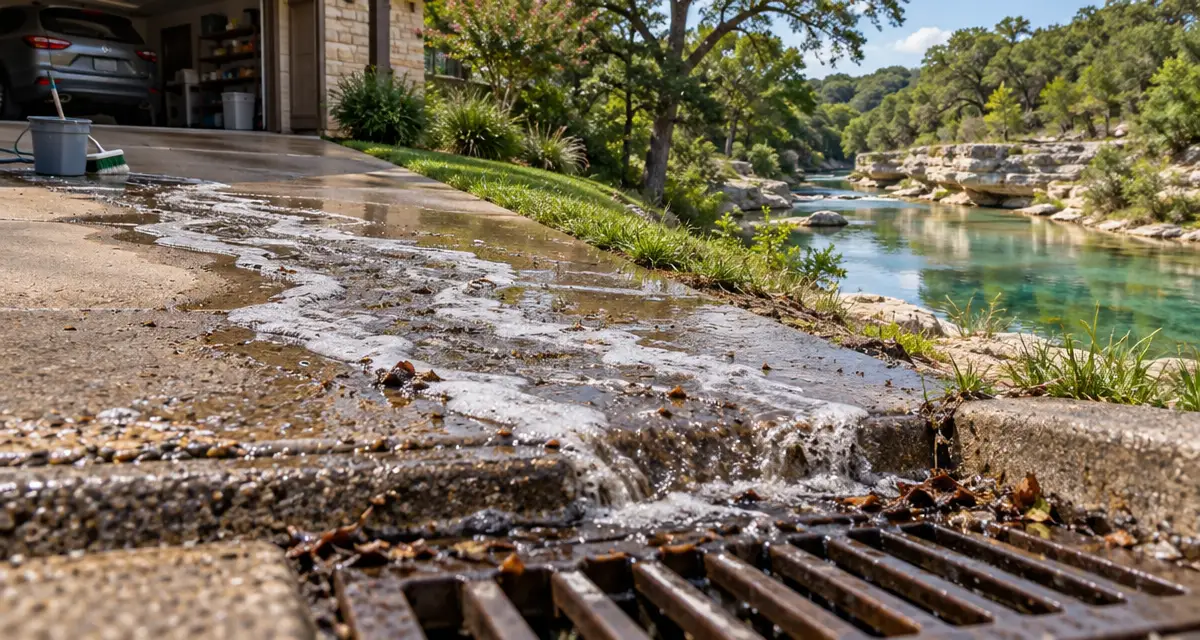
When you wash your car in your driveway, that soapy, dirty water has to go somewhere. In the Austin area, it typically flows into the nearest storm drain. Unfortunately, this sends a mix of detergents and vehicle contaminants directly into our local creeks, rivers, and lakes without any treatment, harming the environment.
To dispose of car wash water properly and legally in Austin, you should either wash your vehicle on a permeable surface like your lawn, which allows the soil to filter the water, or hire a professional mobile detailer who uses compliant water reclamation and disposal methods.
The Problem with Driveway Car Washes
At first glance, washing your car at home seems harmless. It’s a classic weekend chore. However, the environmental impact is more significant than most people realize. Your car accumulates more than just dirt and dust. Its surfaces collect oil, grease, brake dust containing heavy metals, and residue from exhaust fumes.
When you wash your car, these pollutants mix with the detergents in your car soap. According to the U.S. EPA, this detergent-rich water then runs off your driveway and into the storm sewer system. Unlike the sanitary sewer, which carries wastewater from your home's sinks and toilets to a treatment plant, the storm sewer is a direct pipeline to Austin's natural waterways. There is no filter and no treatment process. That contaminated water ends up in places like Barton Creek, Bull Creek, and eventually Lady Bird Lake and the Colorado River.
This pollution can harm aquatic life, promote algae blooms that deplete oxygen in the water, and degrade the overall health of the ecosystems we cherish in Central Texas.
Austin's Specific Rules for Water Runoff
Austin Water has established clear guidelines to mitigate water pollution from vehicle washing. The rules differ slightly for residents washing their personal cars and for commercial operations, but the goal is the same: keep pollutants out of the storm drains.
For homeowners, current city regulations require that any at-home car washing be done with a hose equipped with a positive shutoff nozzle. This prevents water from running continuously, conserving water and reducing total runoff. It's also important to remember that Austin has water use restrictions that can change based on drought conditions. You should always check the current watering schedule with Austin Water before you start washing.
For businesses, including mobile car washes, the rules are even stricter. Austin Water's guidelines state that wastewater containing pollutants or cleaning compounds may not be discharged into the storm sewer. Professional detailers must have a system to contain their wash water and dispose of it properly, often by taking it to a designated sanitary sewer cleanout.
Eco-Friendly Alternatives to Driveway Washing
Fortunately, you have several options for getting your car clean without harming the environment. These methods help you conserve water and prevent polluted runoff.
- Wash on Your Lawn: If you must wash your car at home, move it onto a grassy or gravel area. The soil and grass act as a natural filter, trapping contaminants and breaking them down before they can reach the groundwater or a storm drain.
- Use a Commercial Car Wash: Many commercial car wash facilities are designed to be environmentally friendly. They often use high-pressure nozzles that use less water per vehicle and, more importantly, they capture, treat, and often recycle their wash water.
- Try Rinseless or Waterless Washes: For light dust and dirt, rinseless or waterless wash products are excellent options. A rinseless wash requires only a small amount of water in a bucket, while a waterless wash is a spray-on, wipe-off solution that requires no water at all. These are perfect for maintenance between deeper cleanings.
- Hire a Professional Mobile Detailer: The easiest and most effective way to ensure a compliant and eco-friendly wash is to hire a professional. A reputable mobile car detailing service understands and adheres to all local regulations for water disposal.
How Professional Detailing Solves the Runoff Problem
Hiring an expert service like Hill Country Shine Detailing takes the guesswork out of environmental compliance. We are committed to protecting the natural beauty of the Austin and Bastrop area while providing a superior clean for your vehicle. Our team is trained in water-wise techniques and proper disposal protocols.
We use specialized equipment and high-quality, eco-friendly products to minimize our environmental footprint. This includes using precise amounts of water and, when necessary, water containment mats that prevent any runoff from reaching storm drains. This professional approach ensures your vehicle gets an incredibly thorough exterior auto detailing without introducing harmful chemicals into our local waterways.
From a simple hand wash to a deep wheel cleaning, we handle every aspect of the job responsibly. You get the convenience of a detailer coming to you, the peace of mind knowing the work is done correctly, and a vehicle that looks its absolute best.
Frequently Asked Questions
Can I wash my car in my driveway in Austin?
Yes, but you must use a hose with an automatic shutoff nozzle to prevent water waste. You are also responsible for preventing polluted runoff from entering the storm drain. The best practice is to wash your car on your lawn instead of a paved surface.
What's the difference between a storm drain and a sanitary sewer?
Storm drains collect rainwater and runoff from streets and properties, channeling it directly into local creeks and rivers without treatment. Sanitary sewers transport wastewater from inside homes and businesses to a treatment facility where pollutants are removed.
Is it better for the environment to use a professional car wash?
Often, yes. Reputable professional detailers and commercial car washes are equipped to capture and properly dispose of wastewater. They also typically use less water per vehicle than a standard at-home wash, making them a more sustainable choice.
What kind of pollutants come from washing a car?
Car wash runoff contains soaps and detergents, as well as oil, grease, coolant, and heavy metals like copper, lead, and zinc from brake pad dust and tire wear. These substances are toxic to aquatic ecosystems.