
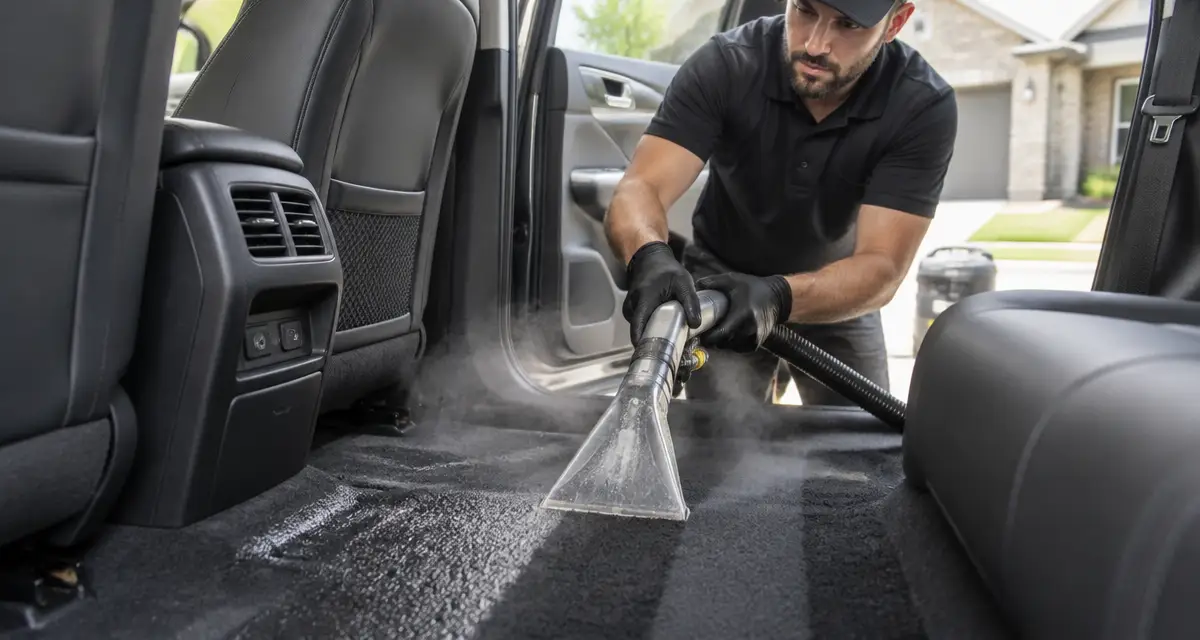
If you've discovered wet car carpets after a heavy rain in Central Texas, you need to act fast. Our region, known as "Flash Flood Alley," makes water intrusion a common problem for vehicle owners. Addressing damp carpets immediately is crucial to prevent musty odors, mold growth, and potential long-term damage to your car's interior and electronics.
Flash Flood Alley and Your Vehicle
Central Texas is prone to sudden, intense rainfall that can quickly overwhelm roads and drainage systems. According to Austin's Watershed Protection department, this area is one of the most flash-flood-prone regions in North America. Drivers are always advised to "Turn Around, Don't Drown" and never attempt to cross a water-covered road, as it's impossible to know the depth of the water or the condition of the road beneath it.
Even if you avoid driving through high water, parking in a low-lying area during a downpour can be enough to cause water to seep into your car's cabin. The result is soaked carpeting and padding, which can become a breeding ground for mold and mildew within 24 to 48 hours.
First Steps for a Water-Damaged Car
If you find water in your car, taking these initial steps can help mitigate the damage while you arrange for professional help. Your safety is the priority, so proceed with caution.
- Assess the Damage: Before turning the key, check how high the water level rose. If you suspect water reached the engine or dashboard, do not attempt to start the car. This could cause catastrophic damage to the engine or electrical systems.
- Document Everything: Take clear photos and videos of the water inside your car. This documentation will be essential if you need to file an insurance claim.
- Remove Standing Water: If the water is contained to the floor, use a wet/dry vacuum to remove as much standing water as possible. Remove the floor mats and let them dry completely outside the vehicle.
- Promote Air Circulation: Open the car doors and windows to let fresh air in. If you're in a secure, dry location like a garage, place fans inside the car, pointing them at the wet areas to speed up the drying process. A dehumidifier can also be extremely effective.
Signs of Hidden Flood Damage
Sometimes, the signs of water damage aren't obvious. The Texas Department of Motor Vehicles warns that water can leave behind subtle but destructive clues. A professional full interior detailing can often uncover these hidden issues.
Look for these warning signs of potential flood damage:
- A persistent musty or sour odor inside the car or trunk.
- Rust appearing on screws or under the carpeting.
- Mud, silt, or grit found under the dashboard, in the glove compartment, or in the spare tire well.
- Upholstery or carpeting that feels damp or looks discolored in patches.
- Moisture or fogging inside the headlights, taillights, or instrument panel.
Ignoring these signs can lead to worsening odors, spreading mold, and corrosion of electrical components. Quick action and a thorough cleaning are the best ways to prevent long-term issues.
Why Professional Detailing Is Essential
While DIY methods can help in the short term, they often can't solve the core problem. Your vehicle's carpet has thick padding underneath that can hold a significant amount of water. Even when the surface feels dry, this padding can remain saturated, creating the perfect environment for mold and mildew to flourish.
Professional detailers have specialized tools that are necessary for this kind of job. We use high-powered hot water extractors that flush out dirt and contaminants while simultaneously vacuuming out deep-seated moisture. Our process for car seat shampooing and carpet cleaning ensures we remove the water you can't see.
Furthermore, a professional service can effectively sanitize the interior and tackle odors at their source. At Hill Country Shine Detailing, we use steam cleaning and specific treatments for car odor removal to ensure your car is not just clean, but healthy and safe for you and your family.
The Detailing Solution in Bastrop and Surrounding Areas
If your car has been affected by flooding in Bastrop, TX, or the surrounding communities, don't wait for the problem to get worse. At Hill Country Shine Detailing, we have the experience and equipment to handle water damage restoration for your vehicle's interior.
Our comprehensive process involves removing seats if necessary, lifting the carpet to dry the padding and floor pan, and using industrial-grade equipment to shampoo, extract, and steam clean every affected surface. We eliminate moisture and kill mold spores, restoring your car's interior to a fresh, clean, and dry condition. We're dedicated to helping our neighbors protect their valuable vehicles from the damaging effects of Central Texas weather.
Frequently Asked Questions
How long does it take for mold to grow in a wet car?
Mold and mildew can begin to grow in as little as 24 to 48 hours in a damp, warm environment like the inside of a car. This is why it's critical to start the drying process immediately.
Can I just replace my car's carpet?
While replacing the carpet is an option, it can be expensive and may not solve the whole problem. If the padding, floor pans, and underlying wiring were also wet, those areas must be professionally dried and cleaned to prevent rust and electrical issues.
Is flood damage covered by my car insurance?
Flood damage is typically covered if you have comprehensive coverage on your auto insurance policy. It's important to contact your insurance agent as soon as possible to understand your coverage and begin the claims process.
What's the difference between a detail and just cleaning wet carpets?
A standard interior detail focuses on cleaning a dry interior. Dealing with wet carpets from a flood is a restoration job. It requires specialized water extraction, intensive drying techniques, and mold/mildew remediation that goes far beyond a typical cleaning.