
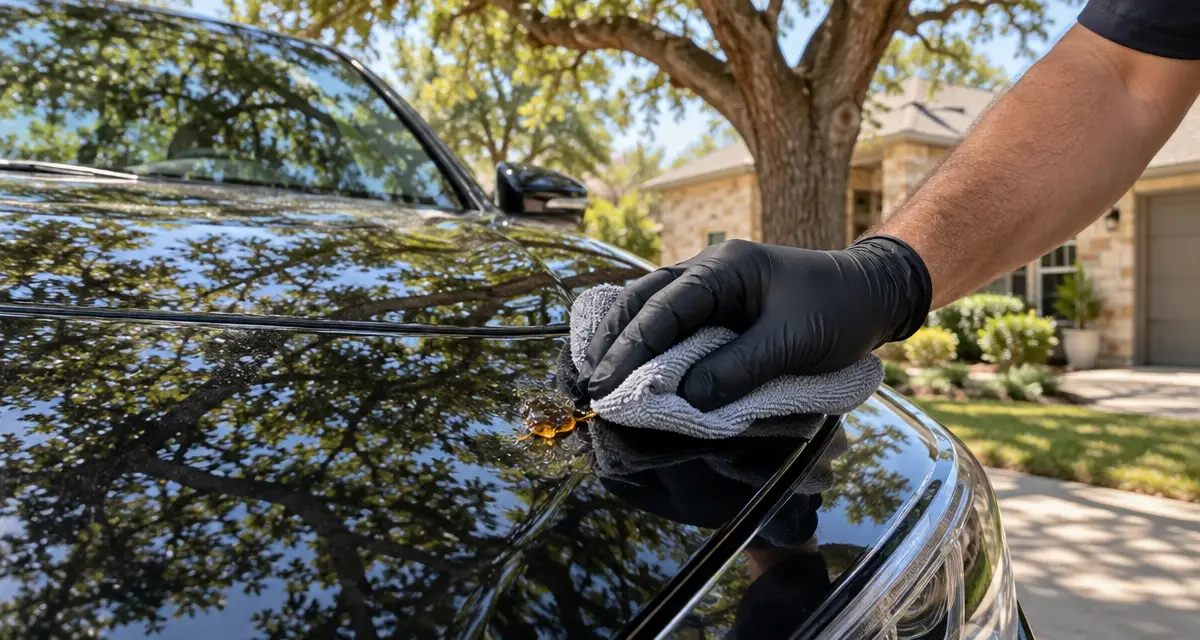
You should remove tree sap from your car's paint as soon as you notice it. The longer sap sits, especially under the hot Smithville sun, the more likely it is to bond with your clear coat and cause permanent damage. Acting quickly is the single best way to prevent staining and etching.
Why Tree Sap Is a Serious Problem for Your Car's Paint
Parking under a shady tree seems like a smart move, but it often comes with a sticky price. Tree sap isn't just a nuisance; it's a genuine threat to your vehicle's paint. Sap is a complex mixture of sugars, minerals, and water that, when it lands on your car, begins to harden as the water evaporates.
As this substance cures, it creates a strong bond with your car's clear coat. If left for too long, the acidic components in the sap can begin to eat away at this protective layer. This process is called etching, which creates a permanent, dull-looking divot in the paint's surface. At this stage, simple washing won't fix it; the damage requires machine polishing to correct.
The Impact of Smithville's Climate on Tree Sap Damage
The climate in Central Texas significantly accelerates sap damage. Smithville, like the greater Austin area, experiences long, hot summers where temperatures consistently climb. This heat essentially bakes the sticky sap onto your car's finish, speeding up the chemical bonding process. According to the National Weather Service, the Austin area climate features many days of intense sun and heat, which is a perfect recipe for paint damage.
What might take weeks to cause a problem in a milder climate can cause permanent etching in just a few days here in Texas. A small drop of sap that lands on your car on Monday could be a serious headache by the weekend. This makes prompt removal critical for any vehicle owner in the Smithville area.
How to Safely Remove Fresh Tree Sap at Home
If you catch the sap while it's still fresh and sticky, you may be able to remove it yourself. Patience and the right technique are key to avoiding scratches. Cars.com advises a gentle approach to prevent making the problem worse.
Follow these steps for safe DIY sap removal:
- Wash the Area First: Before you target the sap, wash the entire panel with soap and water. This removes loose dirt and grit that could scratch your paint during the sap removal process.
- Use a Dedicated Sap Remover: Purchase a quality bug and tar or tree sap remover from an auto parts store. These products are formulated to break down sap without harming your car's clear coat.
- Apply with a Microfiber Towel: Apply the remover to a clean, soft microfiber towel, not directly onto the paint. Gently place the damp towel over the sap spot and let it dwell for 30-60 seconds. This allows the product to soften the sap.
- Gently Dab and Lift: Instead of aggressive rubbing, use a gentle dabbing or lifting motion to wipe the softened sap away. Turn the towel to a clean side for each pass. Repeat the process if necessary.
- Wash and Rinse Again: Once the sap is gone, wash the area again with car soap to remove any residue from the chemical remover.
- Apply Protection: The sap and the remover may have stripped any existing wax. It's a great idea to apply a fresh coat of wax to the treated area to restore protection. A routine of regular hand waxing creates a barrier that makes future sap removal much easier.
Mistakes to Avoid When Removing Sap
Your first instinct might be to scrape or scrub, but this can cause more harm than good. Avoid these common mistakes:
- Scraping with a Fingernail or Tool: This will almost certainly cause deep scratches in your clear coat that are expensive to repair.
- Using Harsh Household Chemicals: Products like nail polish remover, Goo Gone, or harsh degreasers can dissolve your car's clear coat and paint.
- Rubbing Aggressively: Scrubbing a hardened piece of sap is like rubbing a small rock across your paint. It will create a web of swirl marks and scratches.
- Waiting Too Long: The most common mistake is procrastination. The longer you wait, the harder the sap becomes and the higher the risk of permanent paint damage.
When to Call a Professional Detailer in Smithville
Sometimes a DIY approach isn't enough. You should call a professional if you encounter any of the following:
- The sap has hardened into a solid, amber-like crystal.
- There are dozens or hundreds of sap spots all over the vehicle.
- You've removed the sap, but a dull or discolored stain remains.
Professional detailers have specialized tools and techniques to handle even the worst cases. We use professional-grade solvents, steam cleaners, and clay bars to safely lift contaminants without damaging the paint. If etching has already occurred, we can use machine polishers to carefully level the clear coat and remove the blemish, restoring your car’s gloss and value.
If your vehicle needs help with stubborn contaminants, our professional exterior detailing services are the perfect solution. As your local experts, we provide top-tier detailing services in Smithville and the surrounding communities. Don't risk damaging your paint; let us handle it safely. Contact us for a quote today!
Frequently Asked Questions
Can I use rubbing alcohol to remove tree sap?
While rubbing alcohol can soften fresh sap, it's also a solvent that can dry out and potentially dull your car's clear coat if used improperly or left on too long. A dedicated automotive sap remover is always the safer choice.
Does a ceramic coating protect against tree sap?
Absolutely. A ceramic coating creates a hard, slick, and chemical-resistant barrier on top of your paint. This hydrophobic layer prevents sap from bonding strongly to the surface, making it incredibly easy to wash off with little effort.
What kind of trees are worst for sap in the Smithville area?
In Central Texas, pine trees are notorious for dripping a very sticky, resinous sap that's difficult to remove. Oak trees, while more known for pollen, can also drop a sticky residue, especially when infested with aphids.