
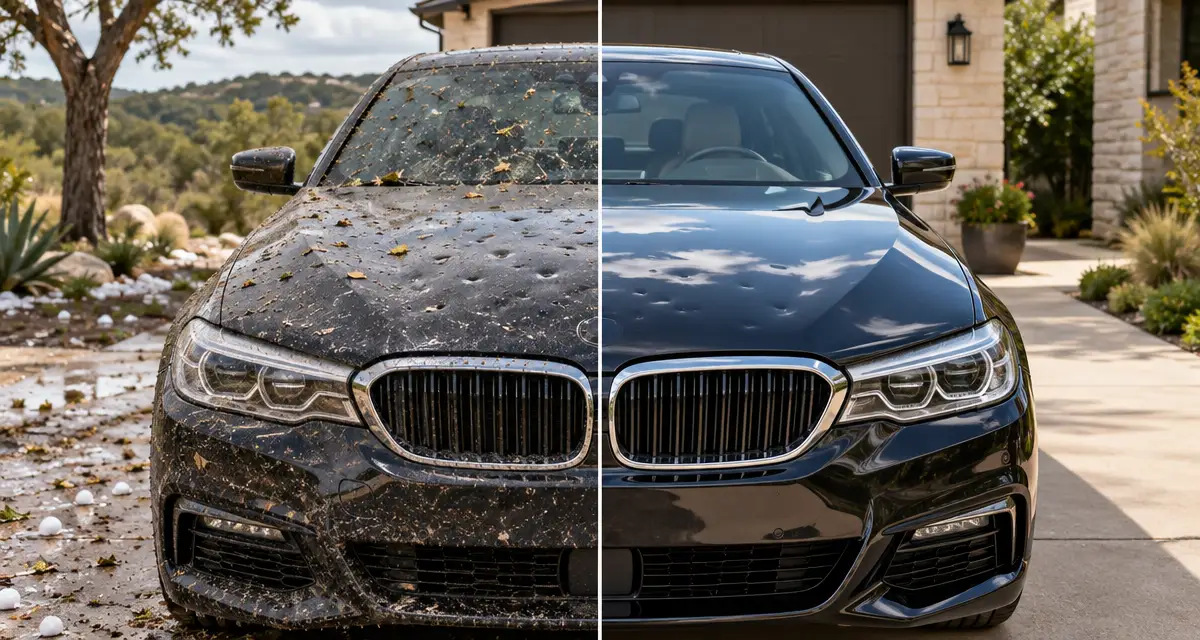
After your vehicle weathers a hailstorm in the Austin area, your first instinct might be to wash away the dirt and grime. However, the correct first step is to carefully inspect for damage before any cleaning begins. A professional hand wash is the safest way to clean your car post-hail, as this process avoids grinding in debris that could scratch the paint.
Why a Careful Approach Is Key After Hail
Hailstones aren't just frozen water; they can carry dirt, grit, and other abrasive particles. Washing your car immediately, especially in an automatic car wash, can drag these particles across your paint, causing scratches and swirl marks. This can turn a cosmetic issue into a more significant paint problem.
More importantly, you need to document any damage for a potential insurance claim. According to the Texas Department of Insurance, one of the first things to do after a storm is to check your property, including vehicles, for damage. Washing the car can obscure or make it harder to photograph the extent of the dents, potentially complicating your claim.
Step 1: Thorough Inspection and Documentation
Before you get out the soap and bucket, conduct a detailed inspection of your vehicle. It's best to do this in bright, indirect light or with a good flashlight to see the full extent of any impacts.
Look closely at all horizontal surfaces, which are most susceptible to hail damage. This includes the roof, hood, and trunk lid. Check for dents, dings, and paint chips. From there, inspect the side panels, doors, and fenders. Don't forget to examine glass surfaces like the windshield, rear window, and side mirrors for any chips or cracks. Plastic trim, grilles, and light covers can also be cracked or broken by large hail.
Use your phone to take extensive photos and videos of all damage. Capture wide shots of the entire car and close-ups of individual dents and chips. This documentation is essential proof for your insurance provider.
Step 2: The Safe Car Washing Method
Once you have fully documented the damage, you can proceed with cleaning. The goal is to be as gentle as possible. For this reason, you should avoid automated car washes that use aggressive brushes. A professional hand wash or a careful DIY approach is best.
If you choose to wash the car yourself, follow these steps for the best results:
- Gentle Pre-Rinse: Start with a gentle rinse using a hose without a high-pressure nozzle. This will safely wash away the majority of the loose dirt and debris without forcing it into the paint.
- Use the Two-Bucket Method: Prepare two buckets. One should have your car wash soap solution, and the other should be filled with plain water for rinsing your wash mitt. This prevents you from transferring grit from the car back into your clean soap.
- Wash with Proper Tools: Use a high-quality, pH-neutral car soap and a soft microfiber wash mitt. Start washing from the top of the car and work your way down, cleaning the dirtiest parts (like the lower panels and bumpers) last.
- Dry Carefully: Gently dry the vehicle with clean, soft microfiber drying towels or an air blower to avoid water spots and streaks.
What Professional Detailing Can (and Can't) Do
It's important to have realistic expectations about what a car wash or detail can achieve after a hailstorm. Professional detailing is for cleaning and protecting your vehicle, not for repairs.
What detailing CAN do:
- Safely and thoroughly remove all post-storm dirt and grime.
- Polish out very minor surface scuffs that may have occurred.
- Apply a protective coating like hand waxing or a durable paint sealant to shield the paint from future elements.
- Perform a comprehensive professional exterior auto detailing service that restores the vehicle's shine.
What detailing CANNOT do:
- Remove dents or dings. This requires a specialized service called paintless dent repair (PDR), where technicians massage the metal back into its original shape from behind the panel.
- Fix deep paint chips that have gone through the clear coat. This typically requires touch-up paint or body shop work.
Protecting Your Vehicle in the Austin Area
Austin's severe weather season, which primarily runs from March through May, frequently brings thunderstorms capable of producing large hail. According to the National Weather Service, hail of one inch in diameter is enough to classify a storm as severe. Whenever possible, moving your car into a garage, under a carport, or to a covered parking structure is the best defense.
If your car has been exposed, a professional detail is a great step toward restoring its appearance and protecting its value. For vehicle owners in Bastrop and the greater Austin area, Hill Country Shine Detailing offers expert services to bring back your car's sparkle after the storm passes.
Frequently Asked Questions
Will washing my car remove hail dents?
No, washing and detailing will not remove hail dents. These require paintless dent repair (PDR) or traditional body shop services to fix the metal panels.
Is it safe to use an automatic car wash after a hailstorm?
It is not recommended. The aggressive brushes in many automatic car washes can grind the dirt and debris left by the storm into your paint, causing significant scratching and swirl marks.
How common is hail in Austin?
Austin and Central Texas experience a distinct severe weather season, primarily from March to May, where hail-producing thunderstorms are relatively common. The local climate is prone to the conditions that create these powerful storms.
Can a ceramic coating protect my car from hail?
A ceramic coating adds a hard, sacrificial layer of protection that can resist minor scratches, chemical etching, and dirt. While it may provide some defense against very small hail, it is not designed to prevent dents from moderate to large-sized hailstones.
Sources
- Severe Thunderstorm Definition - National Weather Service
- Austin Climate Summary - National Weather Service
- Thunderstorm Safety Fact Sheet - Texas Department of Insurance